
What is the Absolute Lightest 17.3-Inch Portable Monitor Available Right Now for Digital Nomads?

Daisy Li
Display Solutions & Product Technology Expert
Specializing in OEM/ODM smart display solutions from 21.5″ monitors to 110″ interactive flat panels, with expertise in product configuration, system integration, quality control, and bulk project delivery for global B2B markets.
Follow me:
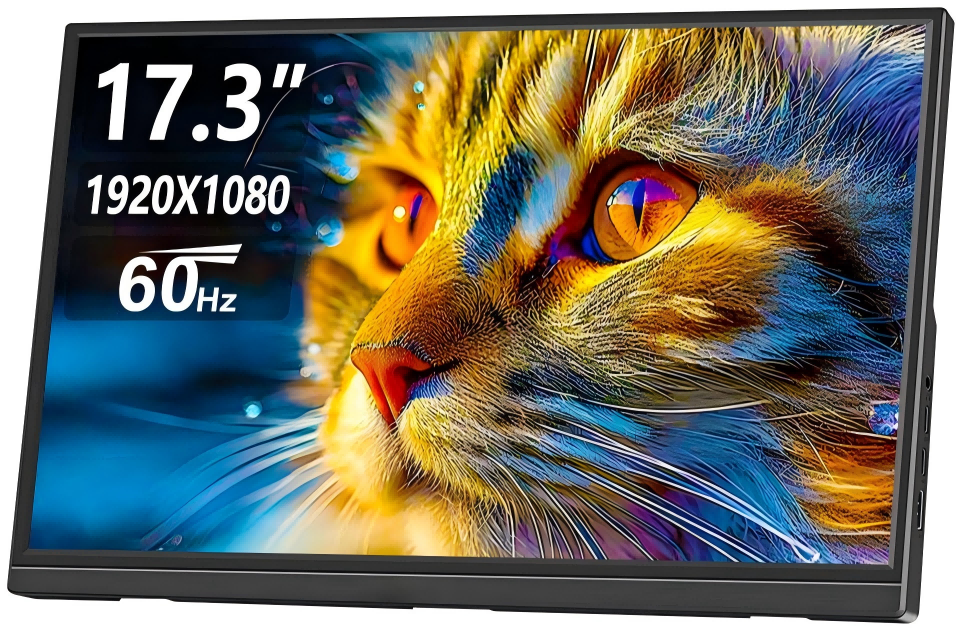
Based on current real-world product benchmarks, the absolute limit for a true 17.3-inch display hovers around the 740-gram (1.63 lbs) mark. To put that into perspective, that is roughly the weight of a premium 12.9-inch iPad Pro, but with a massive 17.3-inch workspace.
- Better-Digi U17SN (740 g / 1.63 lb): Currently holds the crown as the lightest true 17.3-inch portable monitor on the market. Built with a specialized CNC lightweight chassis, it features a Full HD IPS display, USB-C, and HDMI connectivity.
- ALOLG 17.3-Inch Monitor (1.63 lb): Tied at the top tier of ultralight options, this model delivers a massive FHD IPS display paired with a minimalist smart cover stand, striking a perfect balance for nomads.
- LG gram +view 17 (17MT70) (780 g / 1.72 lb): While technically a 17.0-inch display rather than a 17.3-inch, it deserves an honorable mention. It is the highest-quality ultralight large display available, offering a superior 16:10 WQXGA (2560×1600) resolution.
Premium & High-Performance Alternatives
If you need high-refresh rates for mobile gaming or specialized workflows, the weight inevitably ticks upward:
- UPERFECT BE173BF (910 g / 2.01 lb): A lightweight, gaming-oriented 144Hz option.
- ViewSonic VX1755 (~1000 g / 2.20 lb): A robust travel and business-focused monitor.
- ASUS ZenScreen MB17AHG (< 1300 g / 2.86 lb): A premium 144Hz business travel display that remains highly portable despite the extra structural heft.
- ASUS ROG Strix XG17AHPE (1060 g / 2.34 lb): An elite 240Hz gaming display, though considerably heavier due to its built-in battery and gaming hardware.
How Factories Engineer Ultra-Light Big Screens
Shaving a 17.3-inch monitor down to 740 grams requires advanced material science and aggressive component optimization. On the factory floor, OEMs achieve these weight profiles through three main breakthroughs:
- Carbon fiber or CNC magnesium-lithium alloy chassis, which reduces weight by 40% compared to aluminum alloy.
- Battery-free “single-cable” design: eliminates the weight of a built-in battery and removes the need to carry a bulky external power adapter.
- Bezels and panels: “ultra-thin open-cell IPS or OLED panels, with bezels reduced to under 4mm,” meaning less casing material and a lighter overall weight.
The Hidden Trade-offs of the Absolute Lightest Screens
Chasing the lowest possible gram count introduces several strict limitations that digital nomads must carefully evaluate before purchasing:
- No Touchscreen Functionality: Protective touchscreen layers require a solid piece of tempered glossy glass. Glass is incredibly heavy. The absolute lightest monitors are strictly non-touch displays paired with thin, matte anti-glare coatings applied directly to the panel.
- Zero Built-in Battery Life: Because they lack an internal battery, these screens act as an immediate drain on your laptop’s power supply. If you are working off-grid from a location without wall outlets, your laptop’s battery life will be cut significantly short.
- Sacrificed Structural Rigidity: To save weight, the chassis walls are engineered to be razor-thin. While they survive standard backpack travel, these ultralight screens are highly susceptible to pressure-cracking or twisting if handled roughly compared to heavier, thick-aluminum options.
- Basic Built-in Kickstands: Sturdy, integrated metal kickstands add massive structural weight. To maintain a 740g profile, these displays rely heavily on detachable magnetic smart covers that double as folding stands, which can feel less stable on uneven cafe tables or soft surfaces
Contact Tenfly today for a free consultation.