
What Does the 2025 Interactive Flat Panel Market Mean for Buyers in 2026?
The interactive display market in 2025 did not grow in a uniform way. Instead, it became more segmented, more rational, and more buyer-driven.
According to RUNTO data, the global interactive flat panel market shipped 911,000 units in Q3 2025, a 7% year-over-year increase. Behind this steady growth lies a more dramatic story: the commercial segment exploded by 44.1%, while the education market saw a slight dip.
This divergence reveals critical shifts in demand structure, technology priorities, supply chains, and risk factors. Also, it’s a signpost pointing toward a new set of rules for purchasing interactive flat panels for business and education that buyers should not ignore in 2026.

Insight 1: The Reality of Market Divergence
The global interactive display market is on two distinct paths. The commercial sector is booming, while the education sector has entered a new phase focused on quality enhancement, efficiency, and policy-driven upgrades.
Commercial Market: A Broad-Based High-Growth Engine
In 2025, the commercial interactive display segment clearly emerged as the main growth driver of the global market. During the first three quarters alone, shipments increased by 38% year over year, reaching approximately 441,000 units, according to industry tracking data. Market analysts widely expect total annual shipments to exceed one million units by the end of 2025.
What makes this growth particularly notable is that it is not driven by a single application scenario. While meeting rooms remain important, demand has expanded well beyond traditional conference use. Interactive displays are increasingly being adopted across a wide range of vertical industries, including:
- Financial services
- Healthcare and medical facilities
- Retail and commercial spaces
- Hospitality and corporate training centers
- Infrastructure and large-scale public projects
This multi-industry expansion has been especially visible in overseas markets such as Southeast Asia and Europe, where enterprises are actively investing in digital collaboration tools.
As a result, interactive displays are evolving from simple “meeting room tools” into versatile digital collaboration hubs that support communication, training, presentation, and decision-making across different business environments.
Education Market: From Rapid Expansion to Policy-Guided Optimization
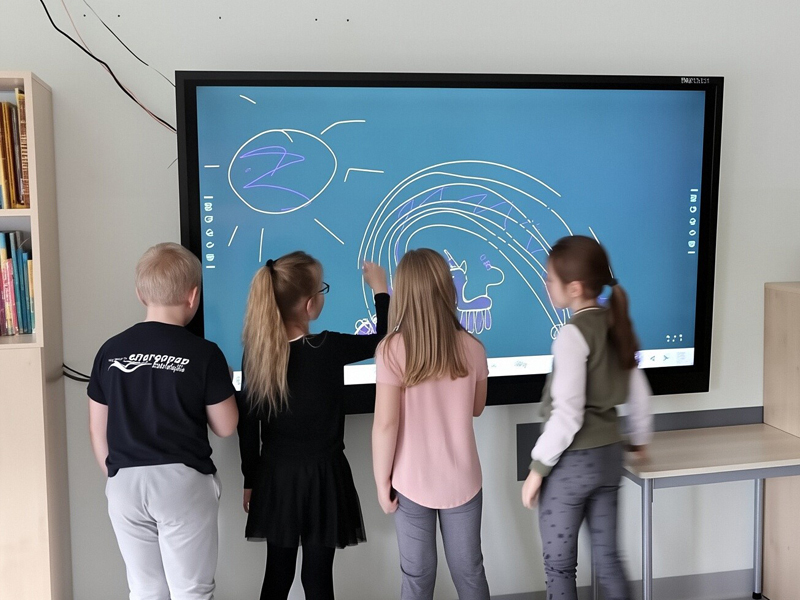
By contrast, the global education interactive display market showed signs of slowdown in 2025. In the third quarter, shipments declined by approximately 6.5% year over year, reflecting a more cautious purchasing environment.
This slowdown can largely be attributed to two structural factors. First, in parts of Europe and North America, education digitalization has already passed its initial expansion phase. Many institutions are now entering a replacement and adjustment cycle, rather than continuing large-scale new deployments. Second, in markets such as China, short-term procurement pressure has emerged due to structural and budget-related constraints.
However, this does not indicate a shrinking or disappearing market. Instead, education procurement is shifting toward a more policy-driven and quality-focused phase. Demand is increasingly aligned with long-term initiatives such as national smart education platforms, scheduled device replacement cycles, vocational education development, and regional education modernization programs.
In this context, purchasing decisions are becoming more selective, with greater emphasis on reliability, system compatibility, and long-term value rather than rapid expansion.
What This Means for Buyers in 2026
The key takeaway for 2026 buyers is simple: a one-size-fits-all view of the market no longer works.
- Commercial buyers should actively embrace the ongoing expansion trend by positioning interactive displays as part of their core digital transformation strategy. Beyond meeting rooms, enterprises should explore broader applications in training, internal communication, and customer-facing presentations.
- Education buyers, on the other hand, are moving from a question of “whether to deploy” to “how well the solution performs.” Procurement priorities should focus on compatibility with national or regional smart education platforms, integration with teaching data ecosystems, and the quality of long-term service and maintenance support.

Insight 2: Technology Evolution: “Hardware Enhancement” and “Software Intelligence.”
The technological evolution of interactive flat panels in 2025 is clearly defined by two parallel tracks: “hardware enhancement” and “software intelligence.”
Hardware Trends: Bigger Displays and Better Visual Comfort
Screen size upgrades are no longer optional.
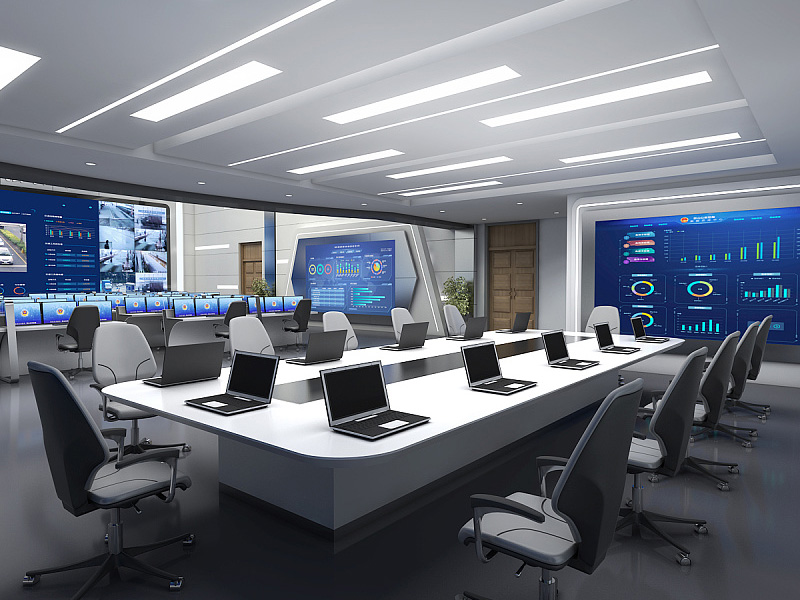
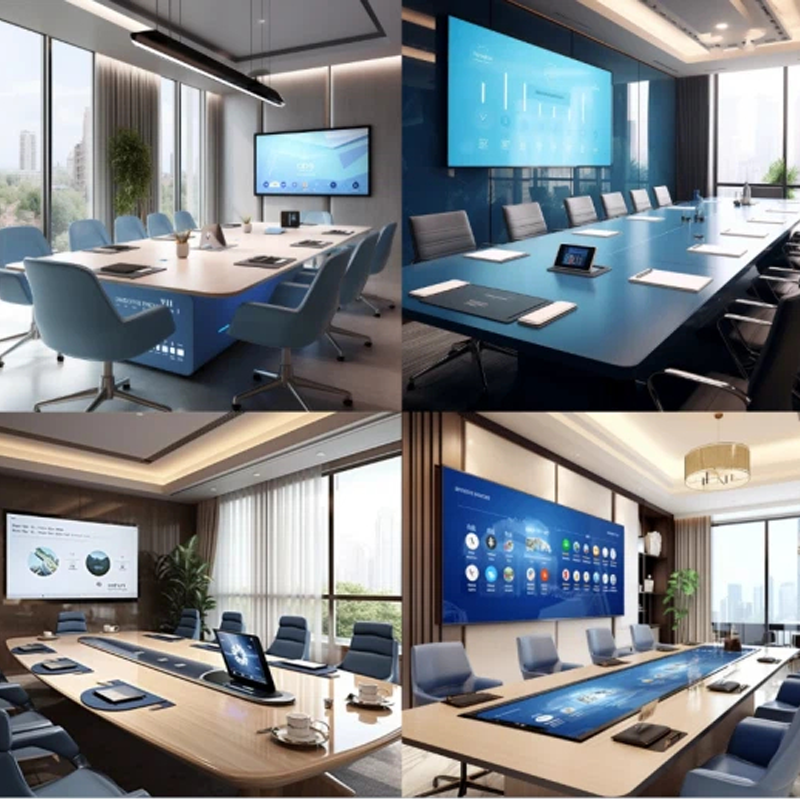
By Q2 2025, the average interactive flat panel size reached a record 78.7 inches, signaling a structural shift in market demand. The data shows the shipments of large-format “near-100-inch” products (98/100/105/115 inches) grew by 31%, while wide-screen products saw an explosive over 7-fold increase. While 65″, 75″, and 86″ models remain mainstream, “near-100-inch” and larger displays, as well as 21:9 ultrawide formats, are emerging as new growth segments. These formats are particularly well-suited for large meeting rooms, command centers, and multi-window collaboration scenarios.
Low-reflection display technology is becoming a baseline expectation.
Anti-glare and low-reflection optical solutions are rapidly moving from premium models into mainstream products. Screens with around 2% reflectance are now found in 55-inch TVs priced around $300, while high-end models, like some from BOE, have achieved reflectance as low as 0.7%. By effectively reducing ambient light interference, they significantly improve visibility in bright meeting rooms and classrooms. As a result, display comfort—rather than raw brightness alone—is becoming a key benchmark for evaluating panel quality.
Software & Ecosystem Trends: AI Integration Takes Center Stage
Across the industry, there is growing consensus that the hardware-spec “arms race” is slowing down. Competitive differentiation is shifting toward software capabilities and ecosystem integration.
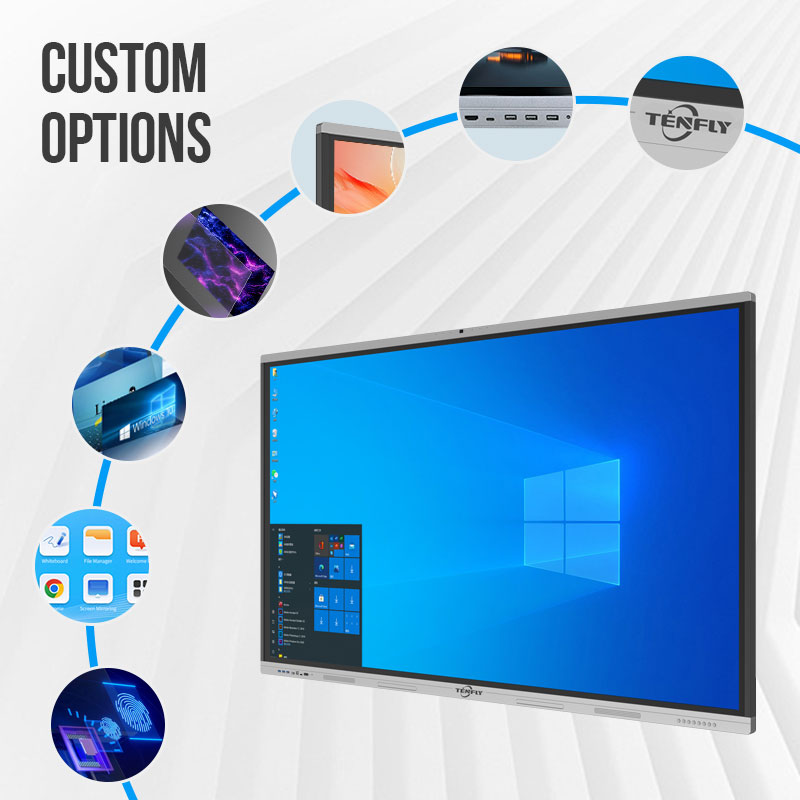
2025 is widely seen as a turning point for AI-enabled interactive displays. Interactive flat panels are evolving beyond simple display and touch devices, incorporating features such as AI-generated meeting summaries, real-time translation, voice assistants, and basic data analysis. In this context, the panel is increasingly positioned as an AI-powered collaboration terminal.
At the same time, buyers are placing greater emphasis on deep compatibility with mainstream collaboration platforms such as Microsoft Teams and Zoom, as well as seamless integration with internal IT systems. For many organizations, software certification depth and long-term ecosystem alignment now outweigh incremental hardware improvements.
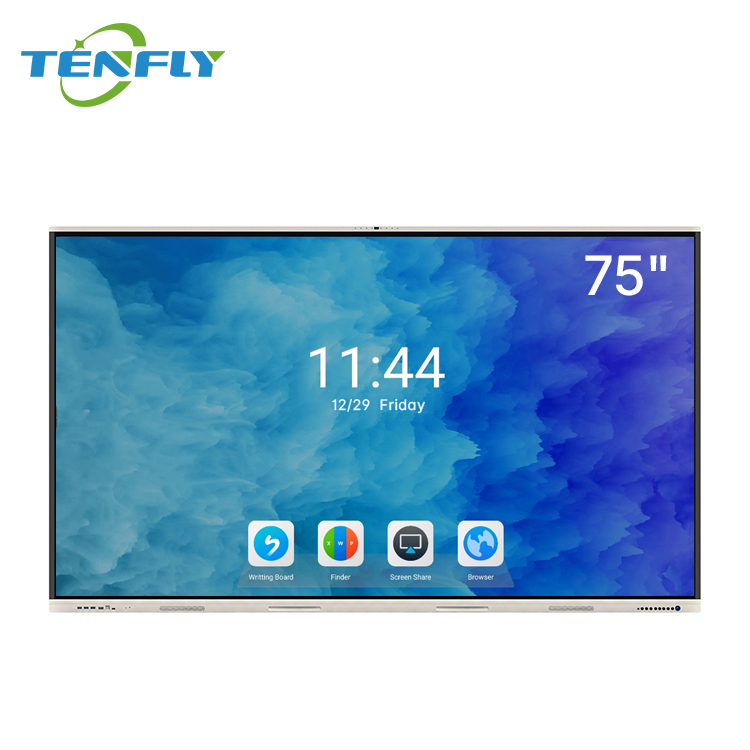
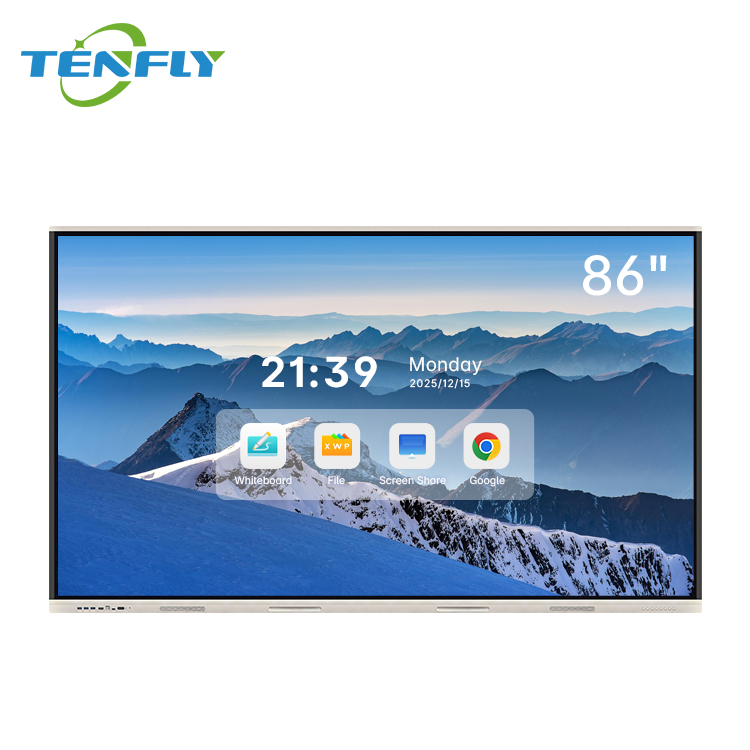
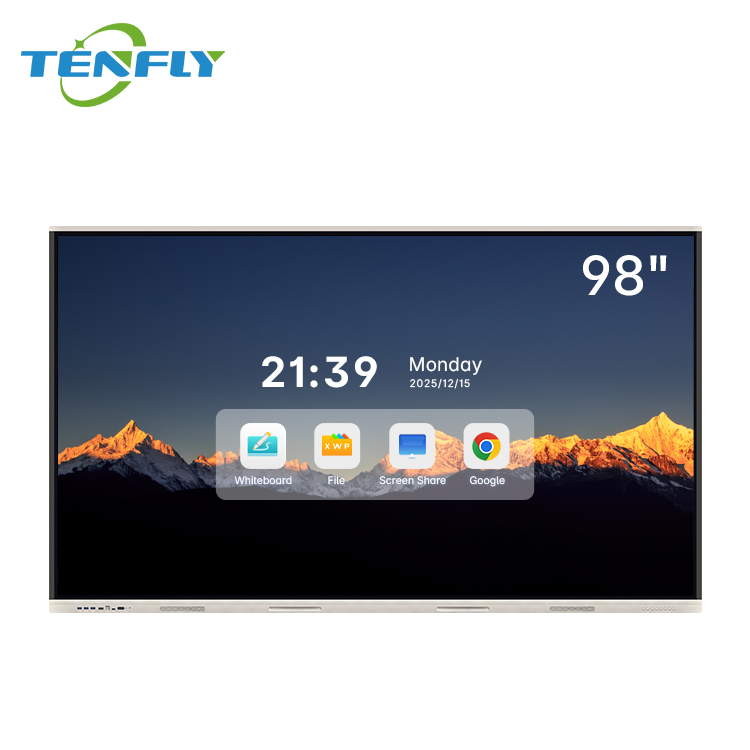
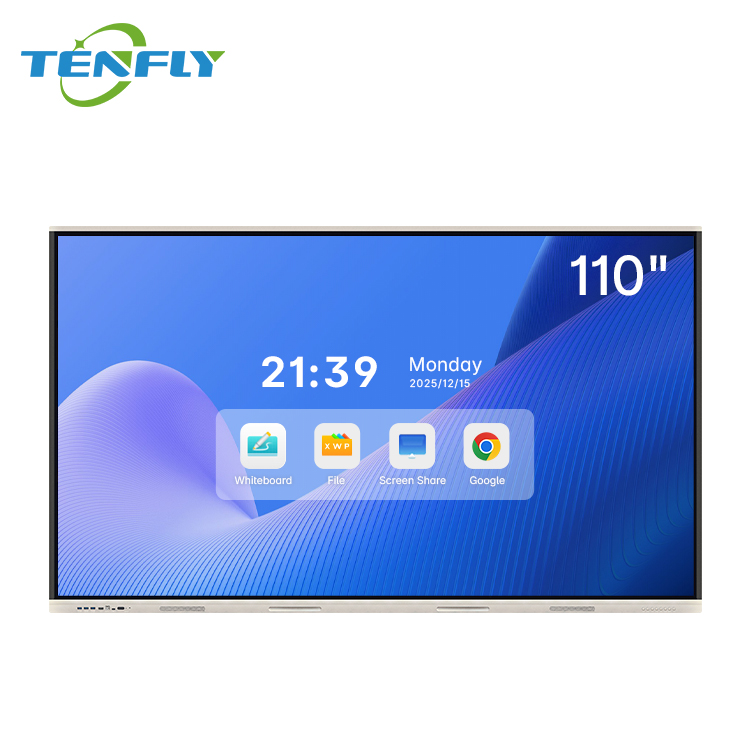
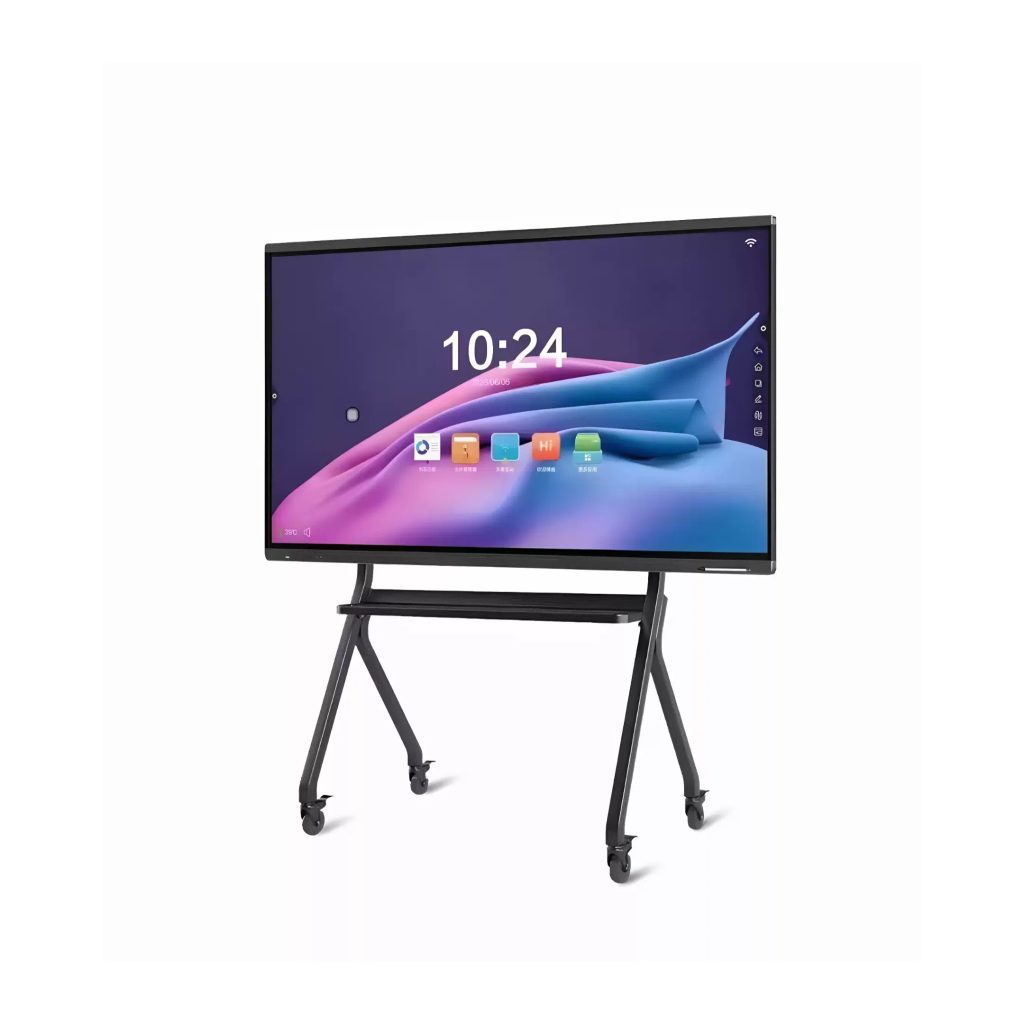
For commercial clients focused on meeting experience, Tenfly’s large-format, low-reflection interactive flat panels, such as 86-inch or 98-inch products, can suit your needs. Welcome to your inquiry.

What This Means for 2026 Procurement Decisions
For 2026 buyers, procurement strategies should shift from “spec-driven thinking” to “value-driven thinking.”
Match screen size to real use cases:
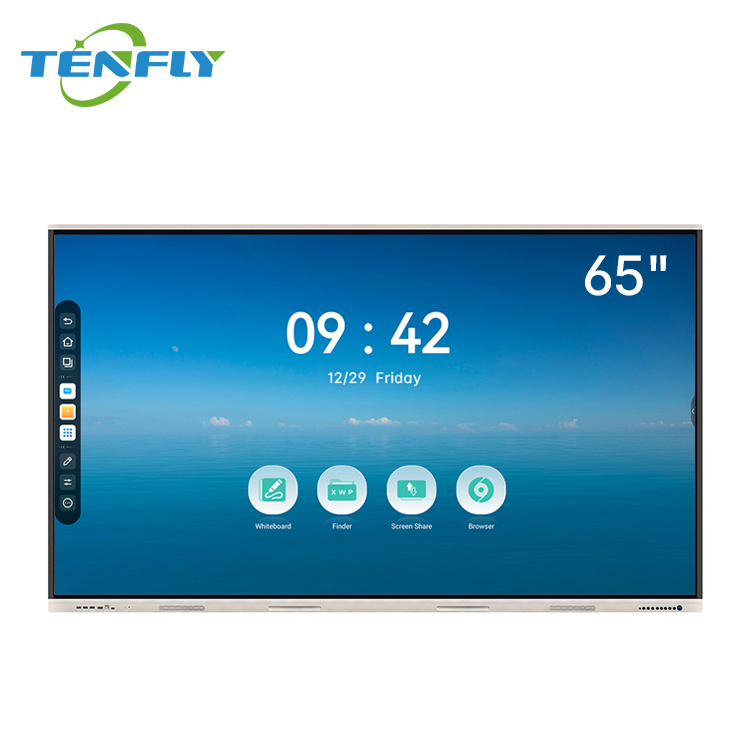
75″–86″ remains a practical choice for small to mid-sized meeting rooms, while large boardrooms, auditoriums, and premium collaboration spaces should actively consider 98″-plus or ultrawide formats. For large, high-end meeting rooms or spaces with significant ambient light, prioritize ultra-low reflectance as a key selection criterion.
Treat AI capabilities as a core evaluation item:
Buyers should request clear explanations—and live demonstrations—of how AI features actually improve meeting efficiency or teaching workflows, rather than accepting generic AI claims.
Prioritize software openness and ecosystem fit:
Operating system flexibility, upgrade roadmaps, and integration with existing software and hardware environments should carry significant weight in vendor evaluation.
Insight 3: Competitive Landscape and Supply Chain Rebalancing
The competitive landscape of the interactive flat panel supply chain solidified further in 2025. Upstream, Chinese panel makers have strengthened their dominance, while downstream brands continue to deepen their expertise in respective sectors.
Upstream Reality: China-Based Panel Makers Dominate the Cost Structure
Display panel manufacturing for interactive flat panels is now highly consolidated in mainland China. Leading panel makers such as BOE, CSOT, and HKC collectively account for 90.6% of global supply in the first half of 2025. By Q3, this figure climbed even higher to 92.9%.
For buyers, this dominance has two direct implications:
- More stable supply availability, even in large-volume or long-term projects
- Structural cost advantages at the finished-product level, creating room for more competitive pricing and negotiation
As panel supply becomes less fragmented, pricing volatility decreases—shifting buyer focus from “availability risk” to value optimization.
Brand Competition: Stable in Education, Dynamic in Commercial Markets
In 2025, brand competition in the interactive flat panel market displayed clear differences between education and commercial segments, with distinct leaders emerging in each category.
The follow table shows the brand competition in 2025:
| Market Segment | Region | Leading Brands | Market Characteristics | Key Data Indicators |
| Education Interactive Display Market | Europe | SMART Technologies, Promethean | Mature and highly consolidated market with long procurement cycles and strong brand stickiness | Top brands dominate public education tenders; replacement-driven demand |
| North America | Newline Interactive, ViewSonic, SMART | Strong focus on platform compatibility and long-term service support | Top international brands account for ~58% of overseas education shipments (Q1 2025) | |
| China | Seewo (CVTE), Honghe (HiteVision), Hikvision, Andao, iFlytek | Policy-driven procurement with centralized purchasing and standardized specifications | Top 5 brands captured >84% of domestic education shipments (early 2025) | |
| Commercial Interactive Display Market | Global | Samsung, LG, BenQ, ViewSonic, Logitech | More fragmented landscape with strong competition across regions and vertical industries | Leading overseas brands together hold ~46% of global commercial shipments |
| China | MAXHUB, Huawei, Haoli, Hikvision, Newline (China) | Rapid growth driven by enterprise digitalization and diversified application scenarios | Top 5 domestic brands accounted for >64% of commercial shipments | |
| Emerging Markets (SEA, MEA, Europe) | Chinese and global brands competing side by side | Fast-growing demand with higher openness to new brands and flexible solutions | Market share still shifting; vendor selection based on price-performance and delivery capability |
This comparison highlights a clear contrast: education markets favor stability and established ecosystems, while commercial markets reward flexibility, solution depth, and regional adaptability.
So, for 2026 Buyers, please:
- Leverage supply-chain-driven pricing power: With panel costs increasingly standardized, buyers should approach negotiations with clearer cost expectations and stronger bargaining positions—especially for multi-unit or multi-region projects.
- Choose brands by application, not reputation alone: Education buyers may prioritize ecosystem maturity and service reliability, while enterprise buyers should actively consider vendors with proven deployments in their target industries.
- Evaluate global service readiness: For multinational organizations, vendors that are actively expanding global logistics, technical support, and localized service networks can offer more consistent rollout experiences and better long-term value.
Why Tenfly Stands Out for Global Buyers
Against this evolving backdrop, Tenfly positions itself not just as a product supplier, but as a globally oriented solution partner.
Backed by strong upstream panel resources and integrated manufacturing capabilities, Tenfly offers:
- Stable, scalable supply capacity suitable for both project-based and long-term procurement
- Flexible product configurations, supporting different screen sizes, operating systems, and application scenarios
- OEM/ODM experience for international markets, enabling customization aligned with regional standards and use cases
- Global export and delivery capability, with experience supporting buyers across education, corporate, and institutional environments
For 2026 buyers seeking cost efficiency without sacrificing reliability or adaptability, Tenfly represents a balanced option—combining China’s supply-chain strengths with a global-market mindset.



Insight 4: Risk Awareness and Procurement Strategy for 2026
Navigating the 2026 procurement landscape requires identifying potential risks and formulating a more proactive strategy.
2026 Interactive Flat Panel Procurement: Risks and Strategic Responses
| Risk Category | Specific Manifestations & Examples | Recommended 2026 Procurement Strategy |
| Macro-Economic & Policy Uncertainty | The North American market saw a 4.3% decline in Q1 2025 due to trade policies and domestic politics. Conversely, the EU’s “Action Plan on Basic Skills” may stimulate demand for educational hardware. | Strengthen Return on Investment (ROI) justification for purchases by quantifying efficiency gains. Monitor policy trends in target markets and incorporate them into the procurement framework. |
| Technology Iteration & Substitute Products | Lower-priced “conference TVs” are competing for basic meeting room budgets. AI features are evolving rapidly. | Define core needs clearly: if deep collaboration and annotation are essential, interactive flat panels remain irreplaceable. Select brands with a clear AI roadmap and a commitment to continuous software upgrades. |
| Supply Chain Volatility & Lead Times | Shifting global trade patterns may impact logistics and costs. Popular sizes (e.g., 86-inch, near-100-inch) may face periodic shortages. | Plan procurement cycles earlier and initiate preliminary discussions with key suppliers. Consider suppliers with strong supply chain resilience and multi-regional production capacity. |
The clear action plan for 2026 procurement is this: start by defining your core scenarios, evaluate based on total value delivered, prioritize ecosystem compatibility over isolated hardware specs, and make agile decisions grounded in a stable supply chain. For any interactive flat panel procurement needs, please feel free to contact us.
In this complex market, as a manufacturer, we understand that supply chain stability is the foundation of customer confidence. Leveraging the strength of China’s panel industry, our products are built with inherent advantages in both quality and cost from the very start.
If the code to the commercial market’s growth is “scenario deep-diving,” then the key to the education market’s transformation is “value realignment.” Whether for a business or a school, 2026 procurement decisions should move beyond simple hardware comparisons. The real evaluation lies in how deeply a product can integrate with and enhance core business processes or teaching methodologies.